When Did the Malays Arrive on the Peninsula? Evidence Is Not a Passport
The Terengganu Inscription can demonstrate that a Malay-language political and religious order existed on the Peninsula in the early fourteenth century; it cannot be read as a birth certificate proving when the Malays first set foot ashore
Sometimes a stone is asked the wrong question.
What a stone can answer is: when a particular script, a particular language, and a particular order of power left their mark here.
What a stone cannot answer is: which day the first vessel came ashore, or whose descendants were aboard.
Setting the Ruler on the Table#
The earlier articles on this site have already laid out several layers.
The Peninsula was peopled very early. The timeline of the Orang Asli — the indigenous inhabitants — stretches far longer than any subsequent royal line, port, or legal identity.
The Peninsula also had ports very early. Around Kedah and the Bujang Valley there were temples, iron-working, river-landings, and maritime trade networks. 6,7
But "there were people" is not the same as "there were Malays."
"There was a port" is not the same as "there was a Malay-language polity."
If this article adopts a single narrow ruler — counting only the written evidence that Malay language left on the ground itself as the hard lower bound for when a Malay-language society enters verifiable history — the timeline becomes very clear.
This ruler is strict, but it is also honest. It does not bundle prehistoric inhabitants, Orang Asli, Austronesian language groups, Indianised port cities, and the later Malay identity all into the same bag.
The Seventh Century: The Stones First Spoke in the South#
The oldest and most frequently cited corpus of Old Malay inscriptions is not on the Malay Peninsula.
It is in south-eastern Sumatra.
The Kedukan Bukit inscription, the Talang Tuwo inscription, the Kota Kapur inscription, and the Telaga Batu inscription together form the epigraphic archive of seventh-century Srivijaya. The texts employ the Pallava script that came from South India, yet they are written in Old Malay; they record military expeditions, royal gardens, oaths of allegiance, court titles, and acts of submission. 8,9
This is not a vague Austronesian migration story.
This is the written record of a polity.
Here one thing becomes visible: Old Malay was not merely a spoken language of trade; it was already being carved in stone to record the commands of a state and the order of political power. 8,9
So if the question is "where did Malay political culture first take clear shape in the written record," the most defensible answer at present is not the Peninsula, but the Palembang world of Sumatra. Andaya's research on the origins of Melayu likewise places the early centre of Melayu political culture within a Sumatran context; Adelaar's linguistic survey reminds us that the question of the Malayic homeland must be disaggregated further still, and cannot be directly equated with the ethnic ancestral homeland of modern Malays. 4,5
The Peninsula's Older Stones Do Not Speak Malay#
At this point, the Bujang Valley enters the frame.
It is important. It is also ancient.
But it is not the answer under this particular ruler.
What the Bujang Valley demonstrates is that the northern Malay Peninsula was integrated into the Indian Ocean trading world at a very early date — it had Hindu and Buddhist temples, iron-working, and ancient port facilities. 6,7
The nearby Buddhagupta inscription and the Cherok Tok Kun inscription allow readers to see the linguistic layering of the epigraphic world at the time. The former is a Sanskrit votive inscription associated with a sea-captain from Bengal; the latter belongs equally to the Sanskrit or Pali tradition, not to the Malay-language inscription corpus. 10,11
This demands a clear statement:
The Bujang Valley can prove that the Peninsula possessed an early port-city civilisation. It cannot, on its own, prove that the Peninsula had by then formed a Malay society verifiable through Malay-language writing. 6,7,10,11
This is not a diminishment of the Bujang Valley.
Quite the contrary. Stating it precisely is the only way to honour it.
Terengganu: The Peninsula's Hard Lower Bound#
The single most critical stone found on the Malay Peninsula itself is in Terengganu.
Batu Bersurat Terengganu — the Terengganu Inscription.
UNESCO's Memory of the World register records it as an inscription in Malay and Jawi script, its content touching on Islamic law and local governance. Al-Attas argued from calendrical and linguistic evidence in favour of the reading 702 AH / 1303 CE; Ahmat Adam subsequently re-examined the damaged date section and proposed the reading 1308 CE. 1,2,3
We must not claim more than the stone supports.
The date section is damaged, and scholars hold different readings. This site does not treat 1303 as an uncontested fixed point.
The more defensible statement is: around the early fourteenth century, or at the latest within the fourteenth century, the eastern coast of the Peninsula already produced a stone inscription written in Malay script and Jawi, promulgating Islamic law. 1,2,3
What can it prove?
It proves that a power existed there at that time — one that considered Malay script and Jawi adequate vehicles for formal legal enactment.
It also proves that a community existed there capable of reading, accepting, or at least being governed by this order of writing.
What can it not prove?
It cannot prove that the Malays arrived on the Peninsula for the first time in that year.
It cannot issue a certificate of common ancestry to all the peoples of the Peninsula.
The most precise statement is therefore: the Terengganu Inscription is early hard evidence of Malay-language writing, Jawi, and an Islamic political-religious order on the Peninsula — it is not a birth certificate for the Malays. 1,2,3,4
Singapore Draws Another Thread Closer#
The same fourteenth century left behind a different kind of evidence.
Not a Malay-language inscription.
A Chinese merchant's record of place names and residents.
Wang Dayuan, in his Daoyi Zhilue, recorded the Dragon's Tooth Strait (Longyamen) near Temasek (Danmaxi), and noted that the place was inhabited by "both local men and women and Chinese." Research articles from the National Library Board, drawing on prefaces and postscripts, date Wang Dayuan's two voyages to approximately 1330 and 1337 CE, with the text compiled around 1349; Miksic, discussing this passage, lists it among the important textual evidence for early Chinese residents in Singapore, while also cautioning that Chinese ceramics alone cannot establish Chinese settlement. 12,13,14
The sentence is short.
But one word in it carries great weight: resided.
It does not merely say that Chinese vessels had called there, nor that Chinese porcelain had arrived. It says that Chinese people were living there.
Archaeological material adds another layer to this picture. The fourteenth-century strata of Singapore have yielded large quantities of Chinese ceramics and trade objects; both Stulemeijer's ISEAS working paper and Miksic's archaeological research place this island within the network of active fourteenth-century ports. 14,15
Where, then, does the Malay-language environment appear?
The NLB's article on Wang Dayuan relays a widely cited explanation: the Banzu recorded by Wang Dayuan can be understood through the Malay word pancur; Derek Heng's JMBRAS study specifically reconstructs Banzu as a fourteenth-century port settlement in Singapore. 16,17
The calibration here must be maintained. The etymological explanation of Banzu is not a locally inscribed Malay text; it does not carry the same evidentiary weight as the Terengganu Inscription.
But it is sufficient to say: Singapore in the mid-fourteenth century enters the verifiable record along at least two threads simultaneously — one a Malay-language place-name environment, the other a written record of Chinese residents. 12,13,14,16,17
This is why the claim that "the verifiable histories of Malays and Chinese in Singapore begin very close together" can hold.
But the qualification must be added: they are close in the timeline of demonstrable written history, not in asserting that the two communities physically arrived at exactly the same moment.
Malacca Does Not Need Sam Po Kong to Sustain the Fifteenth Century#
On the Malacca side, the nature of the evidence is different again.
In the early fifteenth century, Malacca as a port-state had already entered the records of the Ming dynasty. From 1403 onwards, Ming envoys, investitures, royal banquets, and tributary missions appear in sequence; in 1411, the ruler of Melaka personally led his entourage to Nanjing — an entry recoverable in the Ming Shilu. 18,19
At the same time, Pires, writing in the early sixteenth century, described the institution of Malacca's four Syahbandars, one of whom was specifically responsible for merchants from China, the Ryukyus, Zhangzhou, and Champa. 19,18
These two sources are of different kinds: one is an official Ming dynastic record, the other a Portuguese account written after visits and interviews in Malacca.
But they point in the same direction: by the fifteenth century, Malacca was clearly integrated into the world of Chinese official relations and Chinese mercantile sea-routes. 18,19
Sam Po Kong therefore matters — but it should not be made to carry the burden of proving the fifteenth century.
The cemetery and memorial system at Sam Po Kong testifies to a later Chinese community's memory, burial grounds, and public space. It does not need to be pulled back to the fifteenth century. The fifteenth-century Chinese connection already has the Ming Shilu and Pires to speak for it; the cemetery history from the seventeenth century onward should be allowed to speak for itself.
What the Ruler Finally Measures#
Let us lay the threads side by side:
Seventh century CE: Old Malay state writing first appears clearly in the Palembang world of Sumatra. 8,9,4
Early centuries CE to the twelfth century: The Peninsula had ports, temples, iron-working, and Sanskrit and Pali inscriptions — but these cannot be directly rewritten as evidence of a Malay-language society. 6,7,10,11
Around the early fourteenth century: The Terengganu Inscription demonstrates that the eastern coast of the Peninsula already had an order of Malay writing, Jawi, and Islamic law. 1,2,3
Mid-fourteenth century: Wang Dayuan brings Chinese residents of Temasek into the written record; the Banzu / pancur interpretation places a Malay-language place-name environment within the discussable range. 12,13,14,16,17
From the early fifteenth century: Malacca's Ming relations and its port institutions make the Malay court, Chinese sea-routes, and multi-origin merchant communities simultaneously and clearly visible. 18,19
The greatest strength of this timeline is not that it uses one community to outrank another.
Its greatest strength is that it separates the evidence into layers.
Human habitation history is one layer.
The history of language and writing is another.
The history of polities is another.
The history of settled communities is another.
Modern legal identity is yet another.
Mixing them together is what turns the question into "who came first."
Separating them makes the question answerable.
The story's next step leads back to a fugitive.
He left Palembang carrying a Sanskrit title, skirted around Temasek, and stopped on the western coast of the Malay Peninsula.
The new port he founded would later be called Malacca.
Sources 19 Every important claim here can be checked. Open it and see.
Do not trust this site. Check it — every source below is clickable.
-
View excerpt ↓
The Batu Bersurat, Terengganu or Inscribed Stone of Terengganu constitutes the earliest evidence of Jawi writing (writing based on Arabic alphabets) in the Malaya Muslim world of Southeast Asia.
-
Search for this source ⌕ no direct link — this button searches for the work 2026-08-08 Report this source
-
Search for this source ⌕ no direct link — this button searches for the work 2026-08-08 Report this source
-
Search for this source ⌕ no direct link — this button searches for the work 2026-08-08 Report this source
-
Search for this source ⌕ no direct link — this button searches for the work 2026-08-08 Report this source
-
Search for this source ⌕ no direct link — this button searches for the work 2026-08-08 Report this source
-
View excerpt ↓
The Sanskrit inscriptions are dated to around the 5th century, which is not surprising since we know that an Indianized settlement already have existed north of Cherok Tok Kun, in the Bujang Valley (about an hour's drive from here), as early as the 2nd or 3rd century.
-
View excerpt ↓
Scholars have placed the years of the trips around 1330 and 1337 respectively.
-
View excerpt ↓
The archaeological data currently available at the Singapore Archaeological Laboratory (S. A. L.) situated on Fort Canning suggest that within the boundaries of the 'civic district' on the island of Singapore, there was a well-used port of trade in the 14th century.
-
View excerpt ↓
This work identifies all of the references to Southeast Asia contained within the MSL and provides them to readers in English-language translation.
This site is written with AI assistance. Please check us.
AI can invent citations that look completely convincing — a real author's name, a plausible title, a sensible year, for a work that does not exist. This is not a theoretical risk; it is a known failure mode. That is why every source on this site is clickable. If a reference cannot be found anywhere, it may well not exist — and we want to know.
How to check us →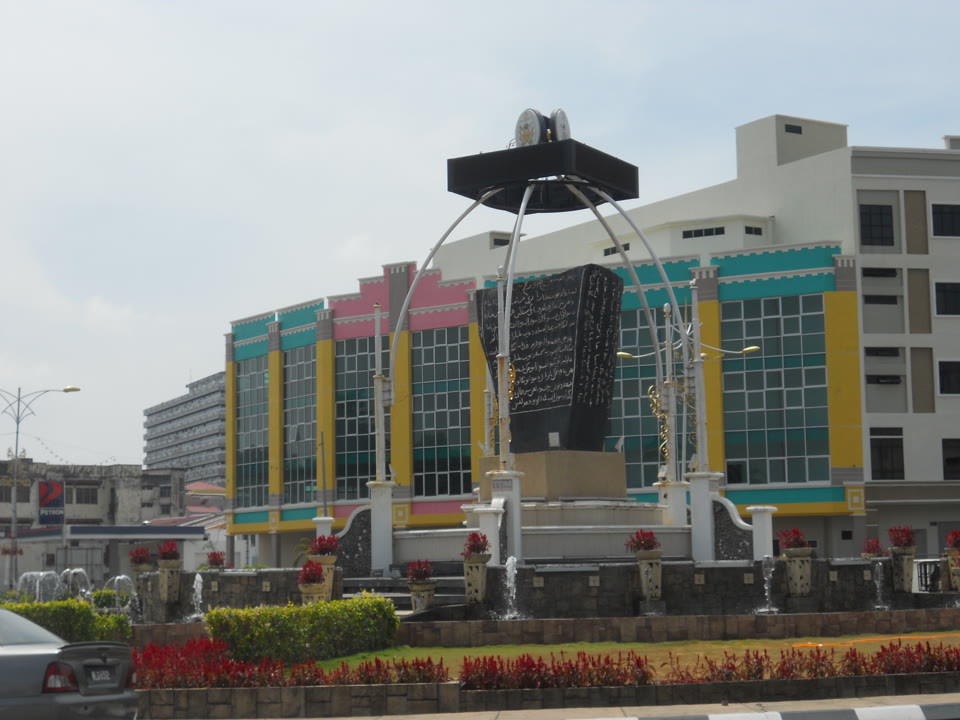
Reader Comments
Be the first to share your thoughts.