Secular State or Islamic State?
The Constitutional DNA Debate in Malaysia
Opening Statement · Proposition (Speaker 1)#
On 31 August 1957, the Alliance delegation made clear to the Reid Commission that Islam as the religion of the Federation "does not mean that this is not a secular state" 1. This was not a subsequent interpretation — it was a declaration made by the framers themselves, in their own words. The British Government White Paper of June 1957 likewise stated in plain terms: "This will in no way affect the present position of the Federation as a secular State" 2. Article 4(1) further proclaims the Constitution to be the supreme law of the land 3 — any law inconsistent with it is void. In 1988, the Supreme Court in Che Omar held that Islam under Article 3 is confined to ritual and ceremonial matters; civil and criminal law remain secular 4. The intent of the framers, the diplomatic documents of the era, and the judgment of the Supreme Court — three layers of evidence converge on a single conclusion: Malaysia's constitutional DNA has been secular from the day of independence.
Opening Statement · Opposition (Speaker 1)#
The "intent" of the framers is the language of 1957. The reality is the legal landscape of 2026. In 1988, Article 121 was amended to insert clause (1A): the civil courts "shall have no jurisdiction" over matters within the jurisdiction of the Syariah courts 5. Once that constitutional firewall was erected, the Syariah courts achieved de facto independence. In 2007, the Federal Court in Lina Joy held that a Muslim woman wishing to change her religion must first obtain the permission of the Syariah court 6 — a citizen's fundamental freedom made contingent on the approval of a religious tribunal. Is that a secular state? Kelantan and Terengganu have enacted Islamic criminal legislation that exceeds the federal prescribed limits 7, and the federal government has consistently declined to challenge them on grounds of "political sensitivity" 7. The legal text is secular; the legal practice has long since crossed the line.
Development · Proposition (Speaker 2)#
The Opposition invokes Article 121(1A), yet deliberately omits its ceiling: Act 355 expressly provides that the maximum sentence a state Syariah criminal court may impose is three years' imprisonment, a fine of five thousand ringgit, and six strokes of the cane 8. The supreme federal law still imposes substantive constraints on Syariah courts. Professor Shad Saleem Faruqi has stated explicitly: "As long as the Constitution is the supreme law, Malaysia cannot be regarded as a theocratic state" 9. The Lina Joy decision is indeed troubling, but it represents a judicial aberration in a particular case — not a structural design feature of the Constitution. The G25 report by former senior civil servants, released in 2020, likewise reaffirmed that Malaysia is a secular state whose governance architecture is consistent with other Commonwealth democracies 10. The constitutional framework has not changed; the deviation lies at the level of implementation, not institutional foundations.
Development · Opposition (Speaker 2)#
The Proposition repeatedly insists that "Act 355 sets a ceiling" — but who enforces it? Kelantan's 2015 criminal code amendment explicitly incorporates amputation and stoning 11; Terengganu has enacted similar legislation 7. These punishments already exceed the federal statutory maximum, yet have never been challenged — because of "political sensitivity" 7. A firewall that nominally exists but is never activated is no different from no firewall at all. The deeper structural problem is this: the expansive interpretation of Article 121(1A) has led certain state legislatures to conclude that the Constitution has effectively lifted all constraints on Syariah courts 12. Professor Shad himself has warned that this ambiguity creates "danger" 12. The institution is being eroded from within, and the Proposition is still brandishing the text of 1957 as a talisman.
Rebuttal · Proposition (Speaker 3)#
The Opposition's most powerful argument is that "the firewall is never enforced." But we must distinguish between "constitutional structure" and "political will" — the failure to enforce is a failure of government courage, not a failure of the Constitution. Consider the contrast: one constitution expressly declares constitutional supremacy 3 and expressly sets criminal sentencing limits 8; another constitution declares Islamic law to be the supreme law — these are two fundamentally different systems. Malaysia belongs to the former. If the blueprints call for a secular building and the contractor cut corners, the remedy is to hold the contractor accountable — not to tear up the blueprints. To invoke political failure in order to negate constitutional design is to substitute consequentialist reasoning for structural analysis.
Rebuttal · Opposition (Speaker 3)#
The Proposition treats the framers' intent as gospel, yet overlooks a critical fact: those same framers deliberately left room for the expansion of Islamic law. Article 3(1) does not entrench the secular principle as immutable, and the 1988 constitutional amendment was passed through entirely lawful means 5. The blueprints themselves contained provisions that permitted walls to be knocked down. The more fundamental question is this: when Lina Joy compelled a citizen to exchange her civil rights for a Syariah court ruling 6, what did "nominally secular" mean to her in practice? Legal scholar Zaid Ibrahim has said it plainly: the civil courts are retreating step by step, and the rule of law is challenged every few days 13. The secular state in theory is being reclaimed, inch by inch, by Islamisation in practice.
Open Debate#
Proposition: The Reid Commission archives speak for themselves — the Alliance said in black and white that this is "not a theocratic state" 1. Whose case are you overturning?
Opposition: We are not overturning historical archives. We are citing the Federal Court's judgment of 2007 6 — the rights of a living person were barred at the doors of a religious tribunal.
Proposition: Lina Joy is a question of judicial interpretation; the constitutional text has never changed — Article 4 still stands 3.
Opposition: Article 4 stands, and Article 121(1A) also stands 5 — the Constitution already contradicts itself internally. Which one do you call "standing"?
Proposition: Professor Shad has stated clearly: religious principles only become enforceable law when enacted by Parliament or a state legislature 9. Islamic law has never replaced the federal legal system.
Opposition: The Kelantan state legislature enacted precisely that in 2015 11, and the federal government chose silence — is that what you mean by "has never replaced"?
Proposition: Silence is not the same as endorsement. Parliament has never passed Hadi's private member's bill 11; the federal criminal sentencing ceiling remains in place 8.
Opposition: The ceiling exists, but no one enforces it. If a door is never closed, does it count as open? 7
Closing Statement · Proposition#
The words of the framers, the endorsement of the British White Paper, the Supreme Court's 1988 judgment — three lines of defence together underpin the foundation of Malaysia's secular constitutionalism 124. Article 4 declares constitutional supremacy 3; the sentencing limits in Act 355 draw a boundary around Islamic law 8; Professor Shad delivers the definitive verdict: where the Constitution is supreme, a theocratic state cannot stand 9. The deviations at the implementation level and the failures of political courage are real problems — but they represent a betrayal of secular constitutionalism, not its abolition. To acknowledge the problem and repair the mechanism is the responsibility of civil society; and the prerequisite for diagnosing the illness is first to confirm the patient's genetic makeup. Malaysia's constitutional DNA is secular.
Closing Statement · Opposition#
We do not deny the founding text of 1957. What we point to is this: law is a living institution, not a museum exhibit. The Article 121(1A) amendment was lawfully passed 5; the Lina Joy judgment lawfully took effect 6; Kelantan's legislation lawfully exists 11 — each step was taken within the constitutional framework, or rather, within the gaps the Constitution left open. Professor Shad himself uses the formulation "neither fully Islamic nor fully secular" to describe the reality 7, and that is the honest answer. When Islamic law has expanded comprehensively at the level of substantive legislation, and when the state declines to enforce its own stated limits on grounds of "political sensitivity" 7, "nominal secularity" offers precious little protection to the ordinary citizen. The constitutional text is the map; reality is the terrain — and the gap between the two is precisely the reason this debate exists.
Judges' Commentary#
Judge A · Constitutional Law Scholar's Perspective#
The Proposition's chain of argument is clear: text → legislative history → judicial precedent — a three-stage structure that is formally unimpeachable. However, when confronted with the rebuttal concerning "enforcement failure," the Proposition dismisses it as "a problem of political will" without addressing the deeper question: if political will is persistently absent, does the practical efficacy of constitutional safeguards not diminish to zero? The Opposition's empirical argument is powerful, but in equating "political failure" with "constitutional transformation," it commits a category error — problems of enforcement are not the same as problems of structure. The central vulnerability neither side engaged: has the mechanism for reviewing Article 121(1A)'s constitutionality effectively ceased to function? That is the real battlefield of this constitutional dispute.
Judge B · Civil Society Perspective#
The Opposition's most powerful blow is Lina Joy — it translates an abstract constitutional debate into the concrete injustice suffered by a concrete person within a concrete institution. That is the rhetorical high ground of this debate. Yet the Opposition then abandons the individual case and pivots to systemic generalisation, losing its emotional anchor. The Proposition, meanwhile, remains throughout at the level of texts and scholarly citations, and never directly addresses this question: for the non-Muslim Malaysian of today, or for the Muslim seeking to convert, what substantive protection does "secular constitutionalism" actually provide? Both sides are talking past each other at different levels of abstraction. This debate needs a more concrete battleground.
Judge C · Historian's Perspective#
Both teams drew extensively on the 1957 constitutional documents, yet neither thought to ask a more fundamental historical question: did the word "secular" carry the same meaning in the context of British Malaya in 1957 as it does today? The Alliance's "secular" was a functional description within the framework of British colonial law — not a comprehensive declaration of political philosophy. The Reid Commission itself was a product of the colonial administration. Without clarifying this historical context, the argument from "framers' intent" remains suspended in the air. The greatest absence from this debate is a genealogical inquiry into the very concept of the "secular state" — and that is precisely the key to unlocking the dispute.
Sources 13 Every important claim here can be checked. Open it and see.
Do not trust this site. Check it — every source below is clickable.
This site is written with AI assistance. Please check us.
AI can invent citations that look completely convincing — a real author's name, a plausible title, a sensible year, for a work that does not exist. This is not a theoretical risk; it is a known failure mode. That is why every source on this site is clickable. If a reference cannot be found anywhere, it may well not exist — and we want to know.
How to check us →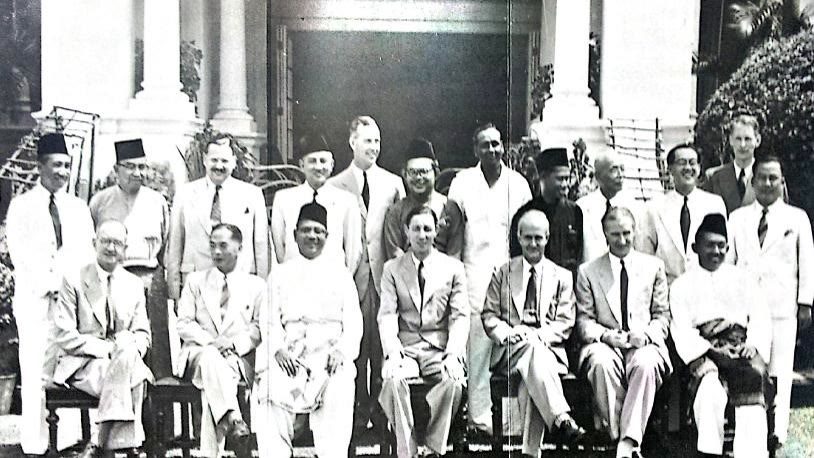 How Does Article 3 Write Islam? The Religion of the Federation and Freedom of Belief
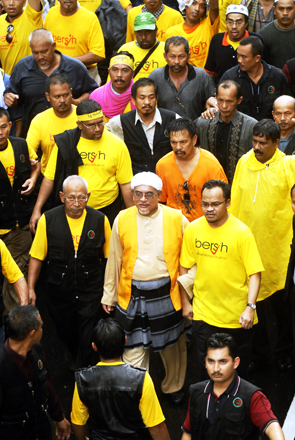 Who Is Hadi Awang? PAS, Islamic Politics, and the Malay Political Centre
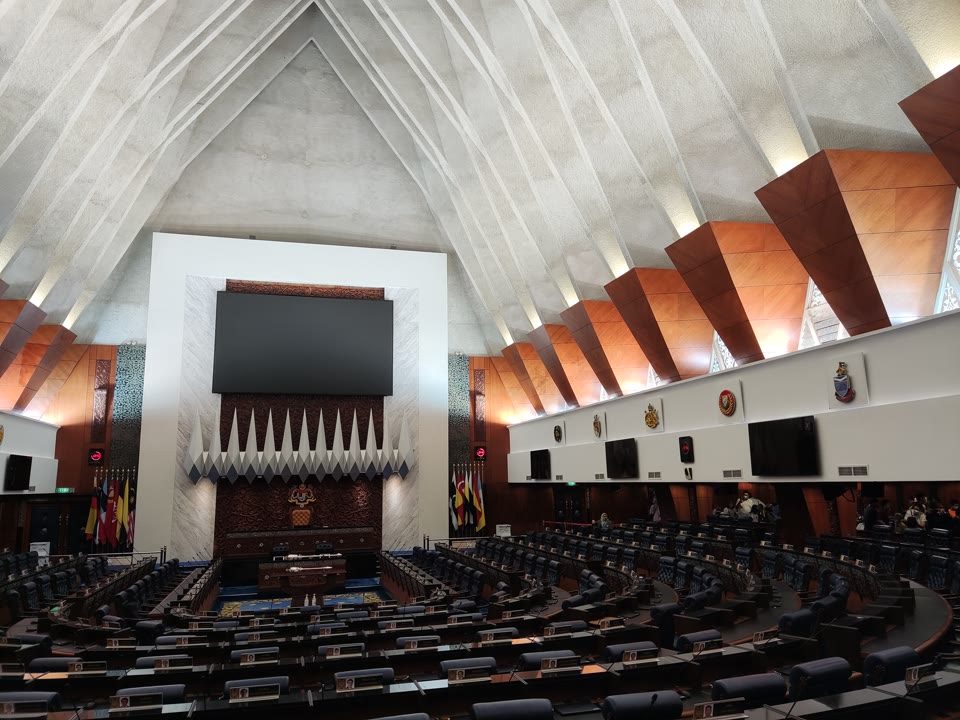 Should Parliament Amend Act 355 to Increase Syariah Court Criminal Jurisdiction Limits?
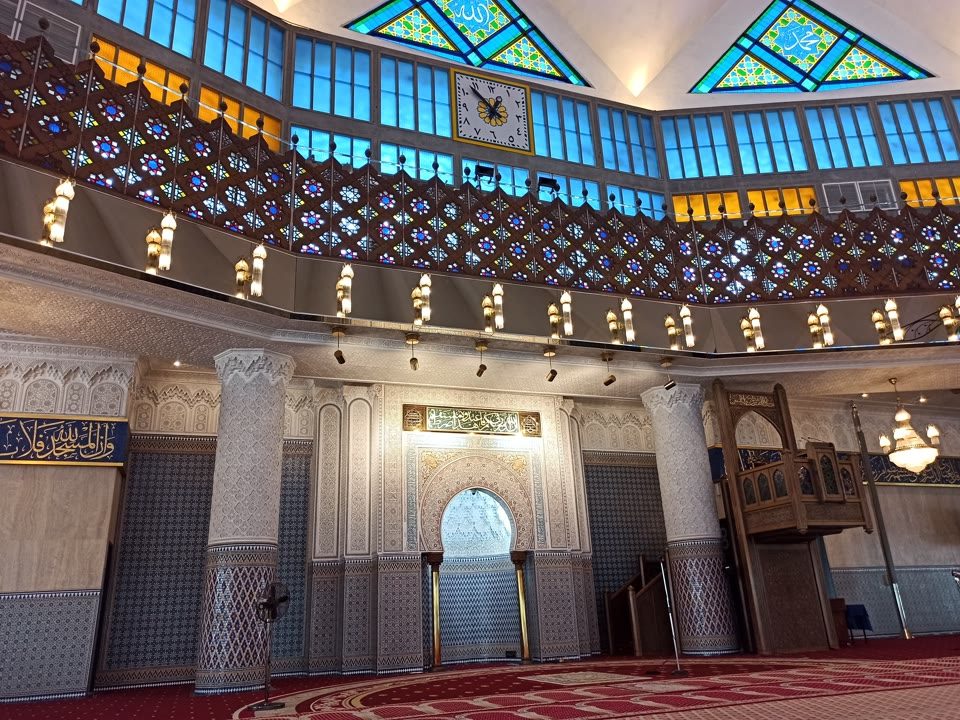 The Billion-Ringgit Question: JAKIM's Budget and the Trajectory of Malaysia's Islamisation Policy
Which side convinced you?
Vote to see how other readers chose.
Your vote cannot be changed once submitted. Please choose carefully before confirming.
Reader Comments
Be the first to share your thoughts.